Painting the inside of your house while you are living in it.
Winter is the best time to paint indoors in Arvada and Westminster, and also the season you cannot just throw the windows open. Here is how we make it work.
- Written by our crews
- Sources linked
- Updated Oct 2026
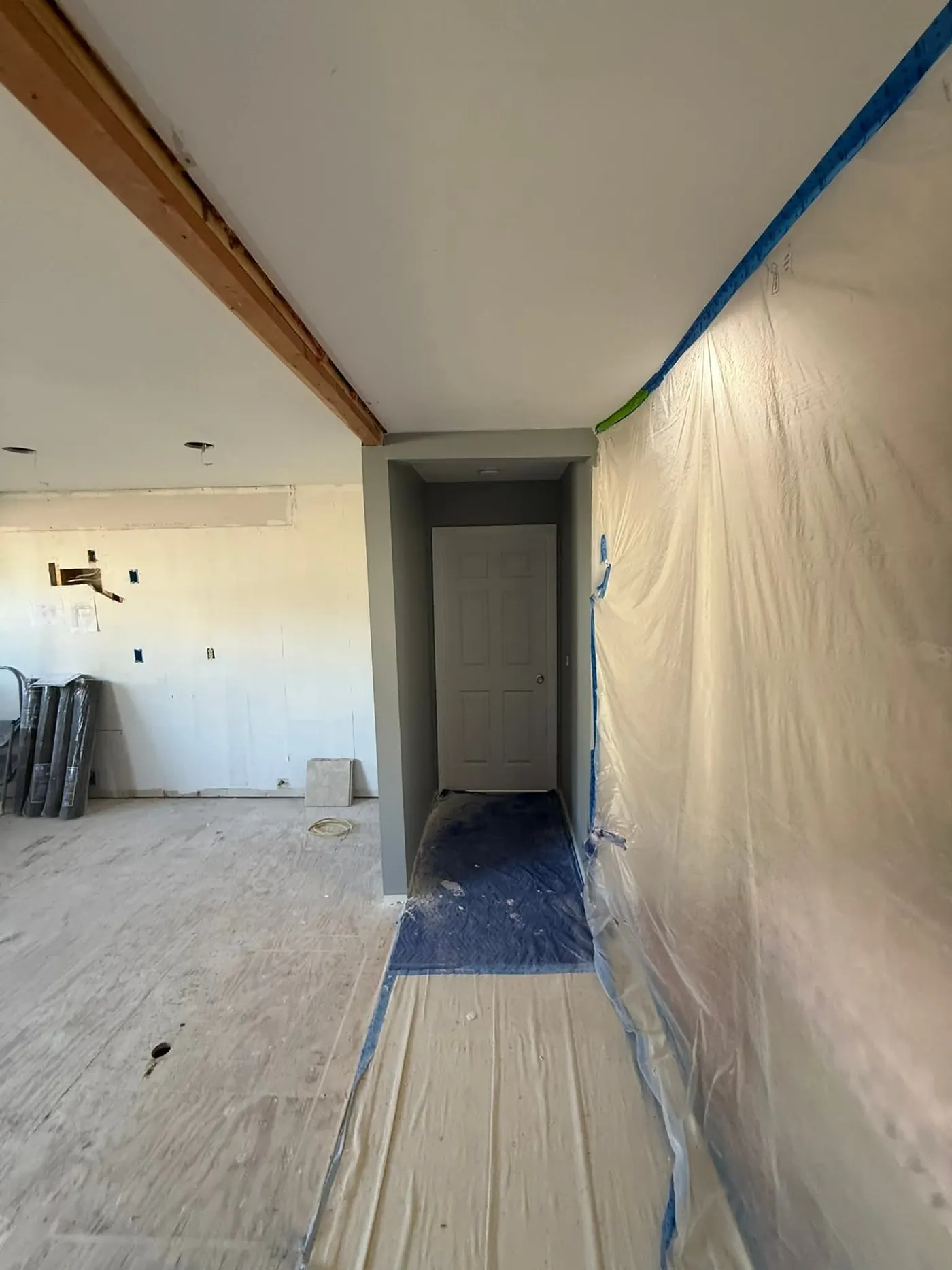
To paint an occupied home in winter, work one zone at a time, keep a bedroom and bathroom free, seal work rooms with plastic, use low-odor water-based paint, and exhaust air with a window fan during and after painting. The CPSC recommends keeping painted rooms ventilated for two to three days when weather permits.
Step 1: Decide the room order
Start with rooms you can live without (guest room, dining room, office), then shared spaces, then bedrooms last, one at a time. Hallways and stairwells go on a day when everyone can use the other stairs or be out.
Step 2: Plan the air, not just the paint
Water-based wall paints are lower in odor than oil-based products, but fresh air still matters. The U.S. Consumer Product Safety Commission advises using window-mounted box fans to exhaust vapors, opening windows as weather permits, and continuing ventilation for two to three days after painting; it also advises keeping young children and people with breathing problems out of freshly painted rooms (U.S. Consumer Product Safety Commission). In January that means short bursts of window fan exhaust on milder afternoons and closing off the room's door.
Step 3: Move the right things
- Crews move and cover furniture; you pack fragile and valuable items.
- Take down personal photos and art you would rather handle yourself.
- Pets: plan a closed room or a day out; wet paint and open doors do not mix.
Step 4: Know what drying looks like in winter
Furnace air is dry, which helps paint dry to the touch, but cold exterior walls can slow it. Keep the thermostat at your normal setting and avoid pushing furniture back against walls the same day.
Step 5: Check the house age
If your house was built before 1978, older paint layers may contain lead. Sanding or scraping that paint triggers Colorado and federal lead-safe requirements (CDPHE lead-based paint and renovation rules). Mention the year built at your estimate.
Ready to plan rooms? See interior painting in Arvada or Westminster interiors.
Sources
- U.S. CPSC, indoor painting ventilation guidance (PDF): cpsc.gov
- CDPHE, lead-based paint and renovation
Questions people ask us
Can you paint a house interior in winter?
Yes. Winter is a good time for interior painting in Colorado; the key is planning room order and ventilation so the house stays comfortable.
How long should I ventilate after painting?
The CPSC suggests continuing ventilation for two to three days after painting where weather allows, using window fans to exhaust vapors.
Can I sleep in a freshly painted room?
It is better to wait. The CPSC advises keeping young children and people with breathing problems out of freshly painted rooms, so paint bedrooms last and air them out.
Tell us about the rooms, walls or cabinets
Pick how you want the estimate: snap photos and we price it virtually, or we come out and walk it with you. Both cost nothing.
Rather talk it through?
720-208-5645
Prefer email? Email the estimating desk